What Makes a Victorian Lampshade Impossible to Mass-Produce
Victorian lampshades belong to a tradition that predates industrial standardization. They were conceived as integral elements of an interior, expected to respond to scale, light, and context rather than conform to a universal specification. From their inception, they resisted uniformity. That resistance is not accidental. It is structural. You can feel it the moment a lamp is switched on and the room settles around it.
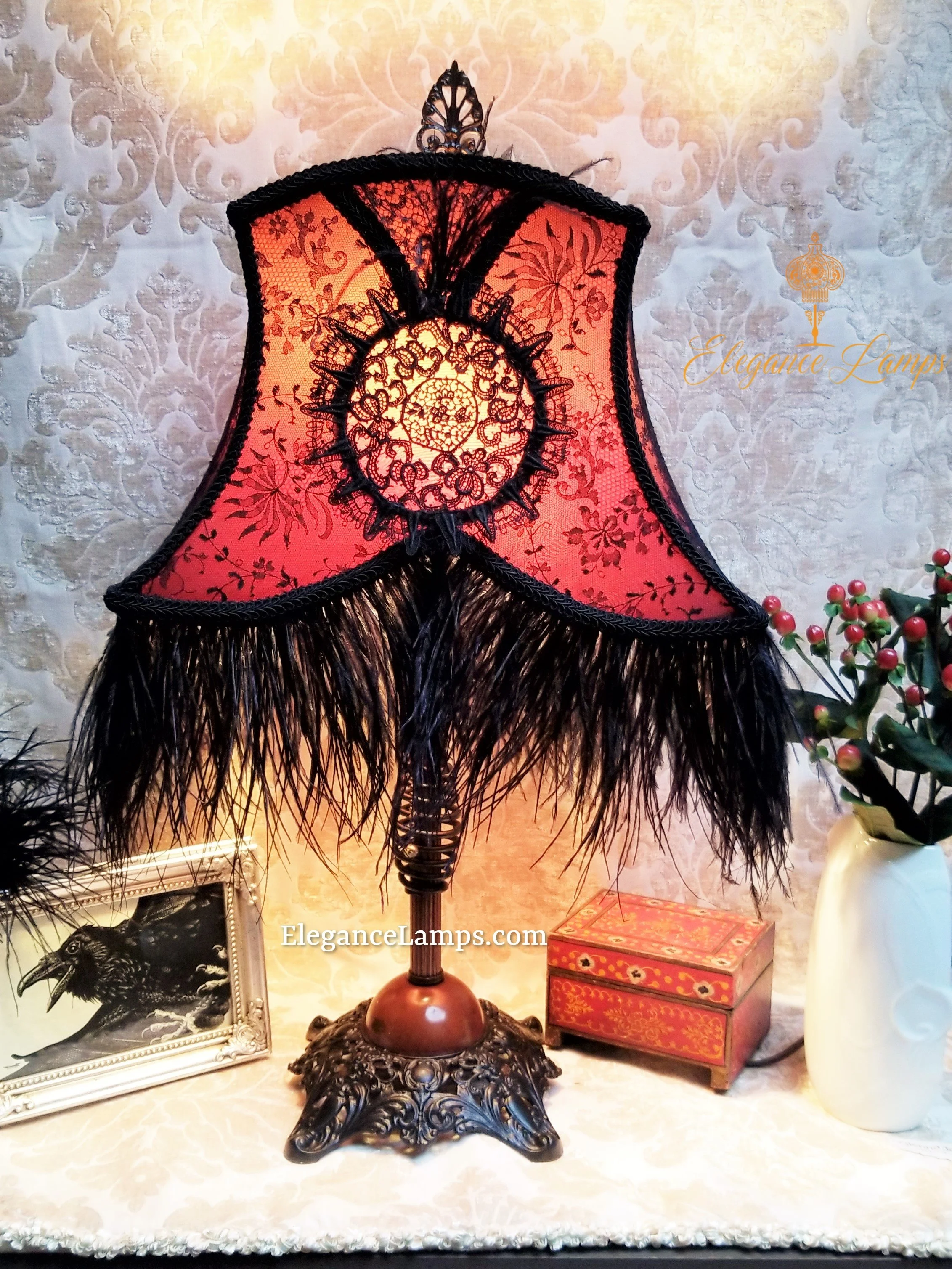
A warm glow changes the room.
Made for a Specific Lamp
A Victorian lampshade is defined by relationship rather than isolation. Its proportions are informed by the lamp it accompanies and the space it inhabits. Height, diameter, shape, and decorative emphasis are evaluated for the lamps’ final positioning in a specific location.
Objects created for specific contexts do not translate cleanly into systems built for repetition. Their success depends on suitability, not uniformity.

Made in relationship to one lamp, not in isolation.
Adjustments Made by Eye
Victorian lampshades are shaped by visual judgment from start to finish. As materials are added, removed, and adjusted, the balance shifts. What looked right an hour earlier may no longer feel settled once light passes through it. These evaluations are not static decisions made once, but responses to subtle shifts that occur as the piece takes form.

Light reveals what still needs refining.
Materials That Refuse to Behave
The materials associated with authentic Victorian lampshades are inherently inconsistent. Antique and vintage textiles carry the marks of time, quality construction, and origin. Silks respond individually to dye, tension, and illumination. Decorative elements behave according to their own structure and design.
Rather than correcting these variations, Victorian lampshade designers accommodate them.

Materials with history have personality.
Artful Composition
Victorian lampshades are composed rather than assembled. Their elements are selected and arranged based on how they function together visually, not how efficiently or cheaply they can be attached. Decisions are revisited as the project progresses.
Composition is an act of evaluation. Assembly is an act of execution. The former cannot be reduced to the latter without loss.
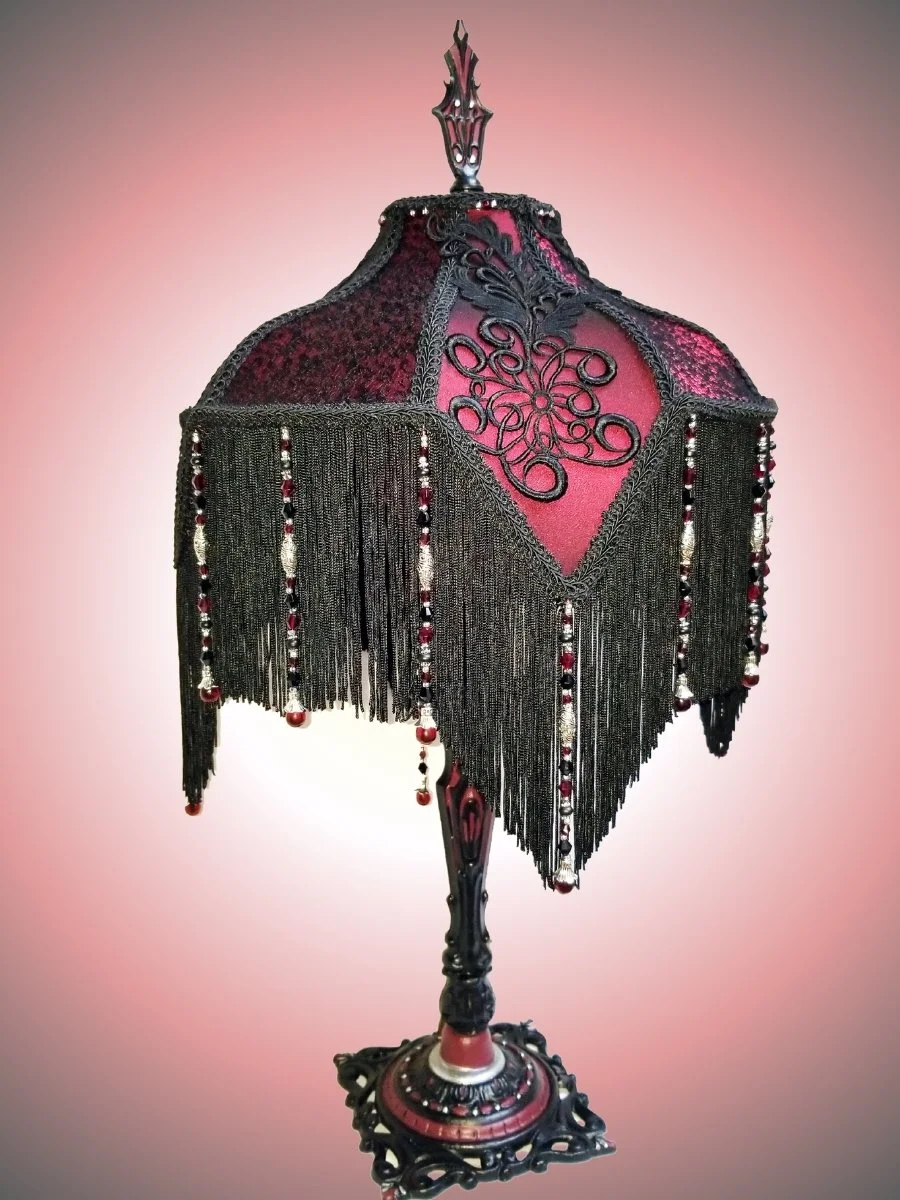
Chosen for harmony, not convenience.
Why Presence Is Hard to Replicate
The visual depth associated with Victorian lampshades arises from purposefully chosen layered materials and dimensional ornamentation. When materials are simplified or standardized, the effect changes.

Outline is easy. Presence is not.
Why These Lampshades Take Time
Time is not incidental to the creation of Victorian lampshades. It is embedded in their structure. Materials require deliberate handling. Visual relationships must be allowed to settle. Decisions benefit from pause, contemplation, and reconsideration.
These lampshades depend on time to arrive at their final form.
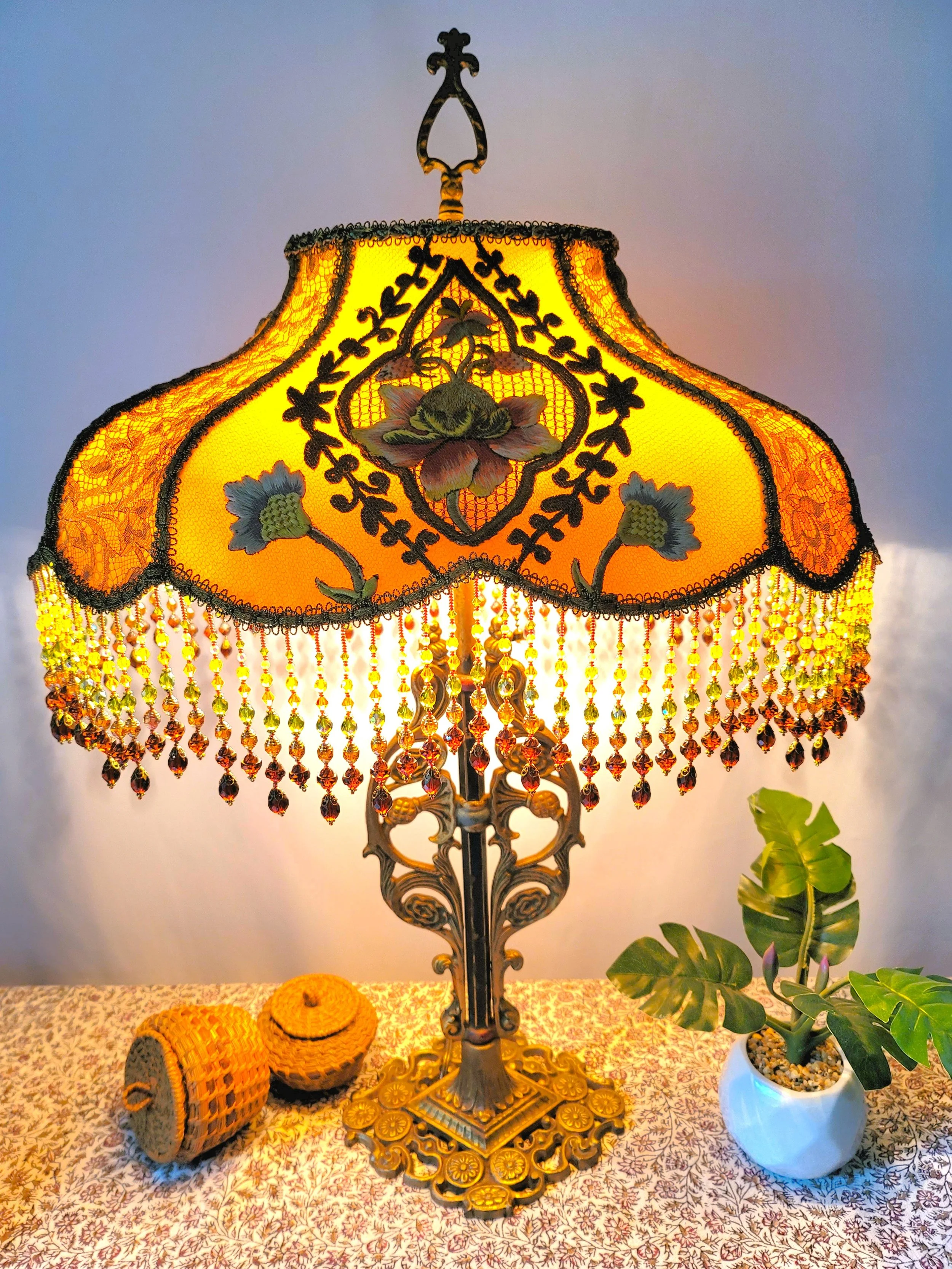
Some decisions need space.
Enduring Distinction
The qualities that prevent Victorian lampshades from being mass-produced are the same qualities that sustain their relevance. Visual balance, material presence, and thoughtful proportion do not scale mechanically without compromise.
For collectors, this distinction matters. It explains why authentic examples remain scarce, why faithful recreations resist efficiency, and why these objects continue to command attention and remain in demand long after stylistic trends fade.
A Victorian lampshade is not difficult to reproduce because it is complicated. It is difficult because it was never intended to be repeated. Each one was meant to resolve a particular lamp, in a particular room, for someone who would live with it.
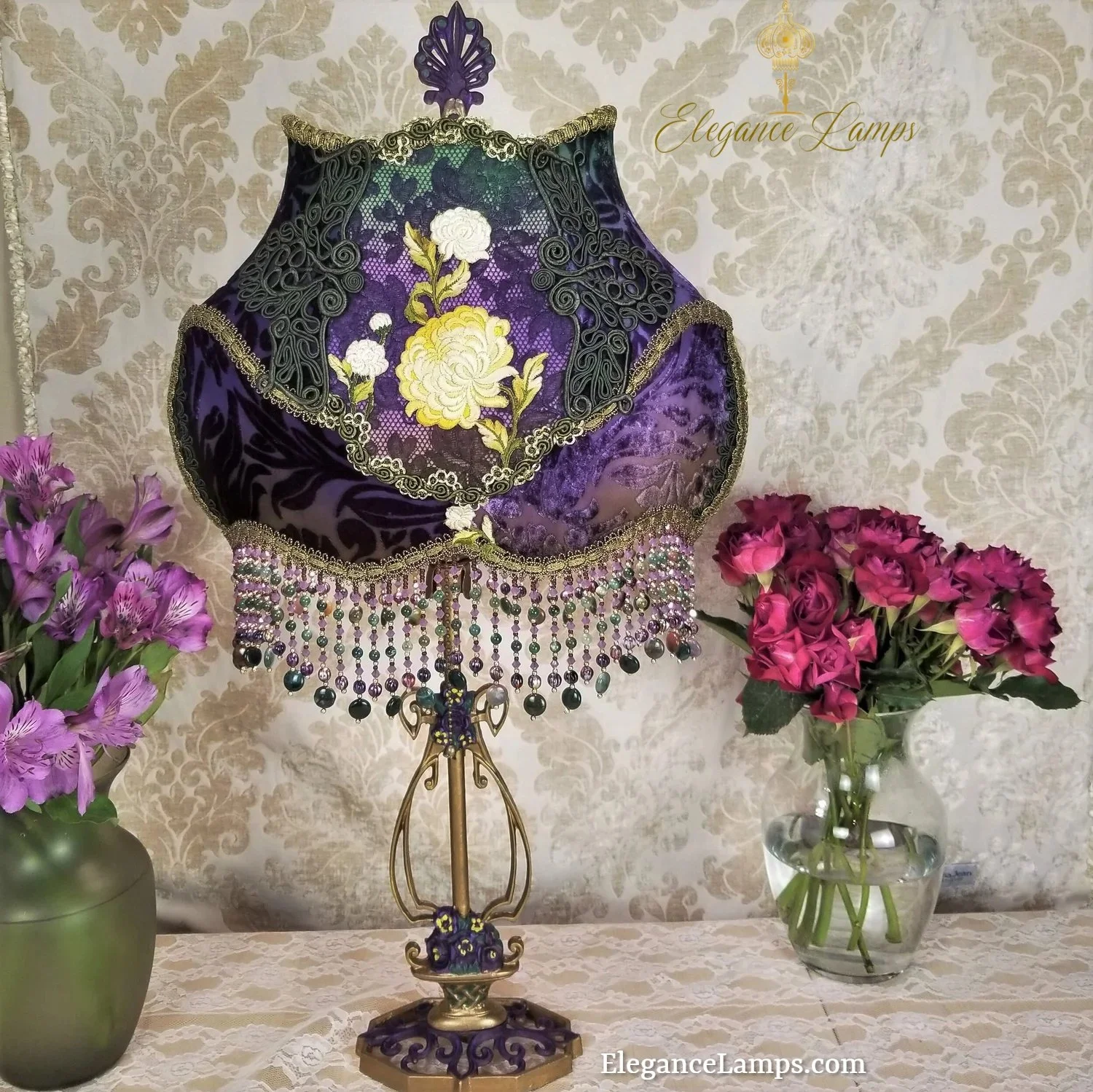
Made to belong, not to repeat.

About the Author
Crystal Hayes, Owner and Lampshade Artist at Elegance Lamps
Seattle, WA USA
Crystal Hayes is a Seattle-based artist and maker inspired by the natural beauty and creative culture of the Pacific Northwest. She designs and handcrafts one-of-a-kind Victorian lampshades, often pairing them with restored antique lamp bases to create functional works of art for everyday living.
Each piece is made entirely by hand, from initial design through final construction, with close attention to materials, structure, and long-term durability.
See the Current Collections
ELEGANCE LAMPS VICTORIAN LAMPSHADES AND ANTIQUE LAMPS
Where beauty meets functionality.
Please use the social sharing buttons below to share this post. Thank you so much! Feel free to leave a comment. You do not need to enter your email address or website.